
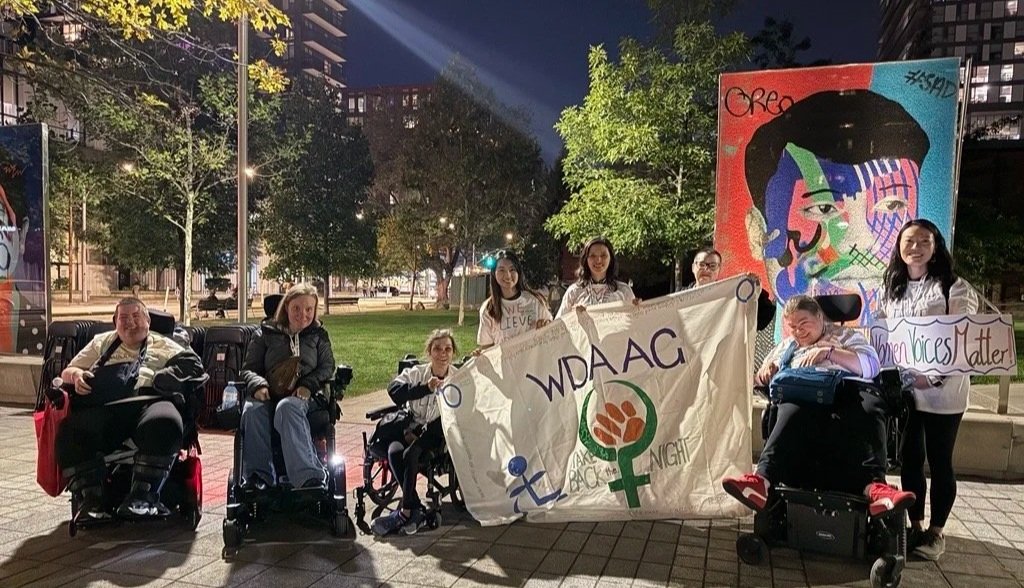
Talking about relationship safety can feel heavy, but bringing light to these topics helps us create a safer, more compassionate community for everyone right here in Toronto. The Toronto Rape Crisis Centre/Multicultural Women Against Rape (TRCC/MWAR) hosted its 41st annual Take Back the Night march on Saturday, September 26, with several staff and clients from Vibrant proud to be in attendance. This year’s theme was, “Someone You Know” and serves as a deeply human reminder that behind every statistic is a familiar face, a neighbour, or a friend who deserves to feel safe and supported. Walking together through the streets at night was a powerful reminder of the strength in our collective voice. It was an inspiring display of solidarity - reclaiming public spaces at night, raising awareness about gender-based violence, and standing side-by-side with survivors. That same spirit of care and community carries directly into how we look out for one another in our own neighbourhoods, whether here in Midtown or across Toronto.
What Does Relationship Safety Look Like?
It helps to clear up what we mean when we talk about unhealthy relationships:
It’s about control, not just physical harm: Relationship abuse isn’t always physical. At its core, it’s a pattern of behaviour where one person seeks to hold power and control over another.
It happens everywhere: Abuse doesn’t discriminate by age, background, or income. In fact, Toronto City Council declared intimate partner violence an epidemic to help direct more care and resources to families across the city
Midtown & Local Communities: In neighbourhoods like Midtown, struggle often stays behind closed doors. High living costs, social pressure, and subtle forms of control mean people often quietly suffer in silence - making gentle awareness all the more important.
Unhealthy Behaviours Can Be Subtle
When we think of harm in relationships, physical safety comes to mind first. But many experience forms of control that leave no visible marks. Below are only a few examples:
Coercive Control: Micro-managing who you see, where you go, or making you ask permission to spend time with friends.
Financial Control: Restricting access to family bank accounts, controlling spending, or limiting work opportunities
Emotional & Psychological: Continuous criticism, boundary-crossing, or making you doubt your own memory and feelings (gaslighting).
Digital Boundary Violation: Monitoring text messages, demanding passwords, or checking location apps without consent.
How to Support Someone with Kindness & Show Solidarity
If someone close to you is in a complex or stressful situation, your quiet support can make all the difference. Listening without judgment, such as avoiding asking, “Why don’t you just leave?” Leaving a relationship can be complicated, scary, and overwhelming. You can also validate their feelings, such as a simple, “I believe you” or “I’m here for you whenever you need to talk” offers a safe space. Lastly, you can help by protecting their privacy - keep conversations completely confidential so they feel secure opening up at their own pace. Lastly, wearing a purple ribbon or sweater in October and November is a quiet, visual sign of solidarity across the GTA.
Safe, Confidential Support in Toronto
If you or someone in your life ever needs a safe space to talk, ask questions, or explore options, compassionate help is available 24/7. You don’t have to be in immediate danger to reach out:
Toronto Rape Crisis Centre’s 24/7 Crisis Hotline: Operated by peer counselors, call 416-597-8808
Assaulted Women’s Helpline (Ontario): Call 416-863-0511 or text #SAFE on mobile. Free, confidential, and multi-lingual.
211 Ontario: Call or text 2-1-1 to find community support, confidential counseling, and housing resources in your specific neighbourhood.
Barbra Shlifer Commemorative Clinic & YWCA Toronto: Local Toronto organizations offering free legal aid, counseling, and compassionate guidance.