
During the warmer months in Toronto, we often look forward to sunny days and outdoor activities. However, summer also brings some serious health challenges, from extreme heatwaves to poor air quality caused by drifting wildfire smoke.
At Vibrant Community Health, our priority is keeping you safe and healthy. Extreme heat and heavy smoke aren’t just uncomfortable - they are serious health hazards, especially for seniors, young children, pregnant individuals, and those with chronic health conditions like asthma or COPD (Chronic Obstructive Pulmonary Disease).
Here is a practical guide on how to protect your body during extreme weather, and how our team can help you stay healthy and connected.
Handling Wildfire Smoke: Protect Your Lungs
Wildfire smoke is made of tiny, microscopic particles that can travel deep into your lungs and bloodstream. Exposure can cause headaches, stinging eyes, a dry cough, and trouble breathing.
Move Indoors: Limit your time outside when air quality advisories are active. Keep your home’s windows closed to keep the indoor air clean.
Wear a Mask: If you must go outdoors, a well-fitted N95 mask is your best line of defense. Standard cloth or surgical masks do not filter out tiny smoke particles.
Run an Air Purifier: If you have a HEPA filter or air purifier, run it in the room you spend the most time in.
How to Check Your Local Air Quality
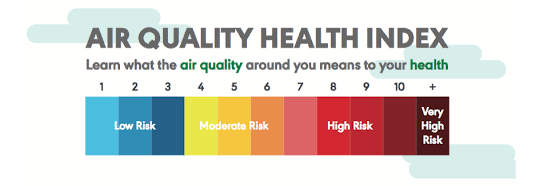
Canada’s official AQHI scale uses a simple 1 to 10+ colour-coded system to let you know when it’s safe to be active outdoors.
Source: Alberta Airsheds Council
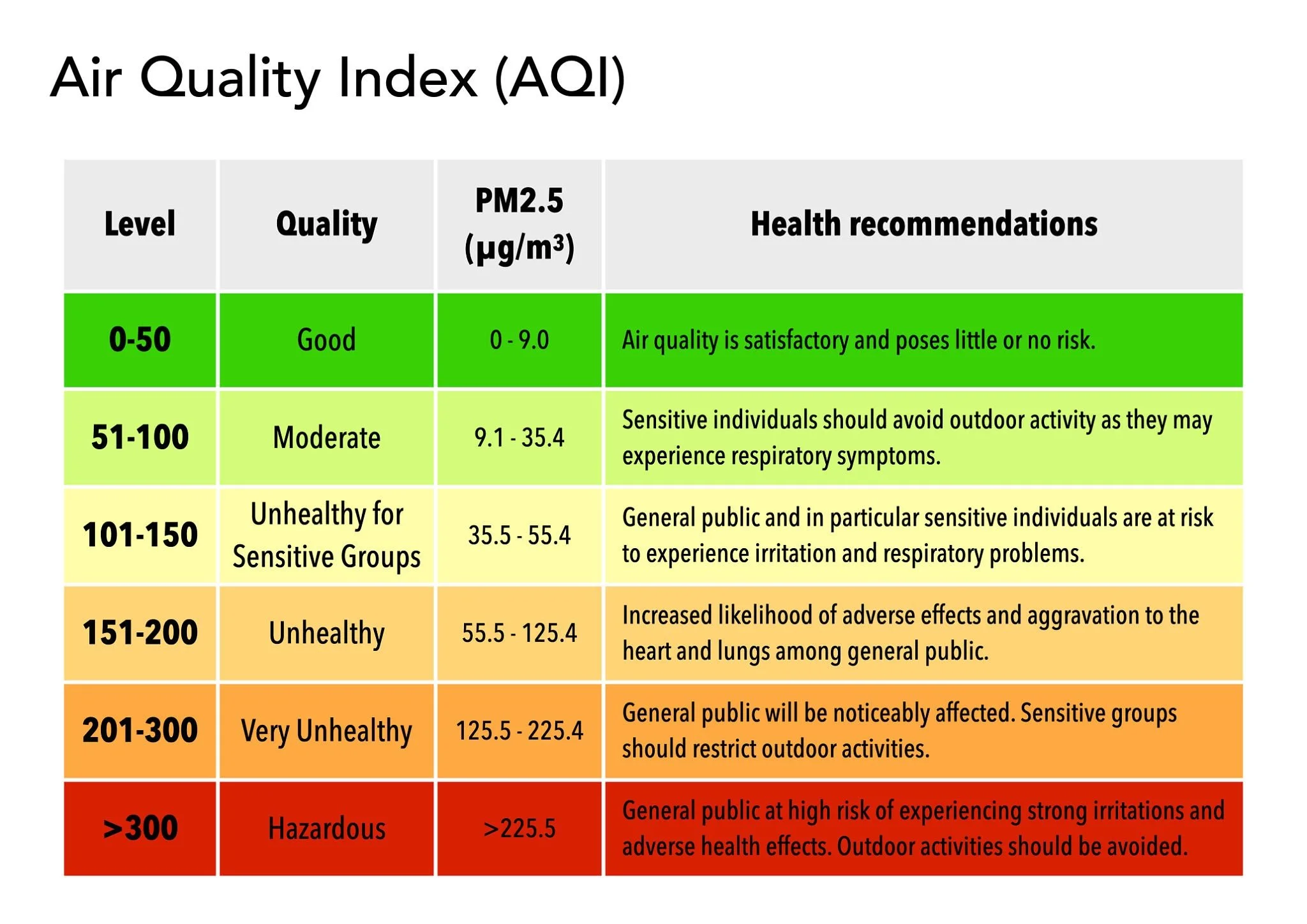
The American Air Quality Index Scale. This is the 0-to-500 scale most commonly used by smartphone weather apps to show daily air quality levels.
Source: US Environmental Protection Agency (EPA)
When you check your local weather app, look at the Air Quality rating to know when to take these steps:
Low Risk (Green / Canadian scale 1 to 3): The air is clean! It is a perfect day for outdoor activities
Moderate Risk (Yellow / Canadian scale 4 to 6): Safe for most people, but seniors, kids, and anyone with COPD, asthma, or heart conditions should take it easy. If you start coughing or feeling tired, head indoors
High Risk (Orange or Red / Canadian scale 7 to 10+): The air is smoky or polluted. Everyone should consider moving activities indoors. If you have a respiratory condition, this is your cue to stay inside with the windows closed.
Our Singalong & COPD Connection: If you live with COPD or asthma, smoky air is particularly dangerous. When air quality improves, we encourage you to join our weekly Singalong Group. It’s a joyful, supportive space, where we practice controlled diaphragmatic breathing, which helps build lung capacity and manage breathlessness.
Beating the Heat: Toronto’s Heat Relief Strategy
Environment and Climate Change Canada issues a Heat Warning when we hit daytime highs of 31°C and overnight lows of 20°C for at least two days, or when the humidex makes it feel like 40°C. When this happens, the City of Toronto activates its Heat Relief Strategy. Here is how you can stay cool and safe across the city:
Where to Hydrate and Cool Down
Free Drinking Water: There are more than 700 park water fountains open. The city also sets up mobile water trailers with bottle filling stations at Nathan Philips Square (which will stay up through the FIFA World Cup 2026!), Mel Lastman Square, East York Civic Centre, and Barbara Hall Park
Visit a “Cool Space”: Over 500 air-conditioned spaces (like public libraries and community centers) are open to the public. You can use the City of Toronto’s Interactive Cool Spaces Map to quickly find the cooling center closest to you
Take a Swim: The City keeps 10 beaches, 170 splash pads, and 55 outdoor pools open. Local tip: Eight pools stay open late until 11:45 p.m. during heat warnings, including the North Toronto Memorial Pool right here in our neighbourhood at 200 Eglinton Avenue.

North Toronto Memorial Pool lights up the night and offers extended hours until 11:45 p.m. during extreme heat warnings. Source: Nick Lachance / Toronto Star via Getty Images
Protecting Our Most Vulnerable Neighbours
Extreme heat can cause serious health emergencies, like heat exhaustion or heat stroke. Watch out for symptoms like dizziness, nausea, confusion, extreme tiredness, or a headache, and call 911 if someone is confused or unconscious.
Plan Ahead: Drink water before you feel thirsty, wear loose clothing, take cool showers, and keep your blinds closed during the day
Check on Your Loved Ones: Call or visit older adults, friends, and family. Make sure they are hydrated and that their home is 26°C or cooler. Never leave children, older adults, or pets in a parked car.
Help for the Homeless: The city opens over 113 extra sleeping spaces and a 24-hour Cool Space at 136 Spadina Rd. with seating, snacks, and AC. Street outreach teams also hand out water and sunscreen. If you see someone in need of support on the street, call 311.
We’re Here to Support You
At Vibrant, we don’t just treat illnesses - we help you navigate the environment you live in. If extreme weather is flaring up your asthma, diabetes, or other chronic conditions, our primary care providers are here to help. If you need a safe, indoor space away from the heat and smoke, our free indoor wellness programs (like Knitting Group, Mindfulness Drop-In, or Adult Colouring) are running safely.
Health is a journey we take together. Stay safe, keep cool, and don’t hesitate to reach out if you need support.
Do you have questions about managing your health, or want to join one of our free indoor programs? Give us a call at 416-486-8666 or stop by our reception desk at 2398 Yonge Street!